
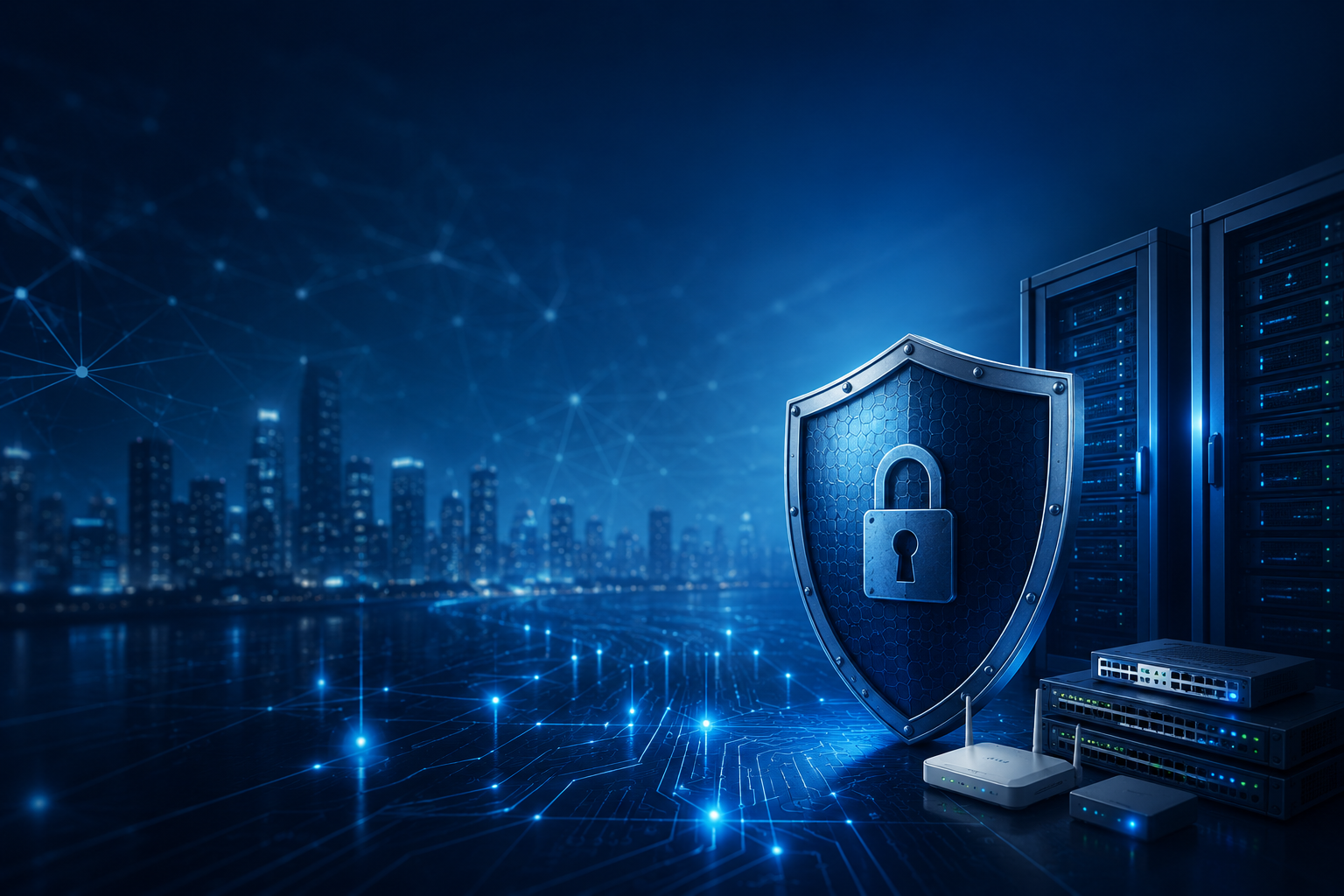
Threat Intelligence
Stop Threats Before They Stop Your Business.
Threat intelligence is not antivirus. It is the active, continuous process of identifying, analysing, and acting on threat data — before an attack reaches your network.
Trusted by 30+ enterprises across India — proactively defending against modern threats




Why Enterprises Trust Layerix for
Threat Intelligence
Most security teams are reactive. Layerix gives you proactive threat intelligence — from dark web monitoring to IOC blocking — all handled by certified in‑house analysts.

Proactive, Not Reactive
We hunt for threats before alerts fire, blocking known attacker infrastructure before it reaches your network.
MITRE ATT&CK Aligned
Our threat intelligence is mapped to real‑world attack techniques — not theoretical frameworks.
Immediate Blocking
IOC feeds are integrated directly into your firewall/IPS, blocking malicious IPs and domains automatically.
Dark Web Monitoring
We monitor underground forums for your credentials, data, or attack chatter — giving you early warning.
100% In‑House Analysts
Your threat landscape is analysed by our 28‑member in‑house team — no outsourced SOC, no subcontractors.
Actionable Reporting
Monthly threat landscape summaries and quarterly posture reviews — not raw data dumps.
Threat Intelligence Onboarding in 6 Steps
Landscape Assessment
Identify your industry's threat actors, attack vectors, and current visibility gaps.
Feed Selection & Integration
Choose and configure threat feeds (vendor, open-source, or custom) into your firewall/IPS/SIEM.
IOC & Rule Configuration
Deploy IOCs, create blocking rules, and tune alert thresholds to minimise false positives.
Dark Web Monitoring Setup
Configure monitoring for your domains, IP ranges, and executive credentials.
SIEM & Alert Testing
Simulate threat scenarios to validate detection, correlation, and notification workflows.
Ongoing Management (Optional)
Monthly threat reports, feed updates, and incident triage under AMC or Resident Manager.
Types of Threat Intelligence
Leadership & decision-makers
Threat landscape for your industry
"Are we being targeted? By whom?"
Security engineers & architects
Attack techniques and tools (TTPs)
"How do they attack? What do we block?"
Firewall, IPS, SIEM config
Indicators of compromise (IOCs)
"What do we block right now?"
What Layerix Delivers
Reactive vs. Proactive Security
❌ Reactive (most companies)
- ✗Wait for alerts to fire
- ✗Respond after a breach occurs
- ✗Patch after an exploit is active
- ✗No context on who is targeting you
- ✗287 days avg. to detect a breach
✅ Proactive (Layerix)
- ✓Hunt for threats before alerts fire
- ✓Block known threat actors proactively
- ✓Patch before the exploit is weaponised
- ✓Know who targets your industry
- ✓Continuous monitoring with actionable feeds
The Intelligence Pyramid
Decision
Block / allow / escalate / patch
Intelligence
Contextualised, actionable
Information
Parsed, structured data
Data
Raw logs, packets, events
Most organisations have layers 1 and 2. Layerix helps you build layers 3 and 4.
Real Threat Intelligence Deployments
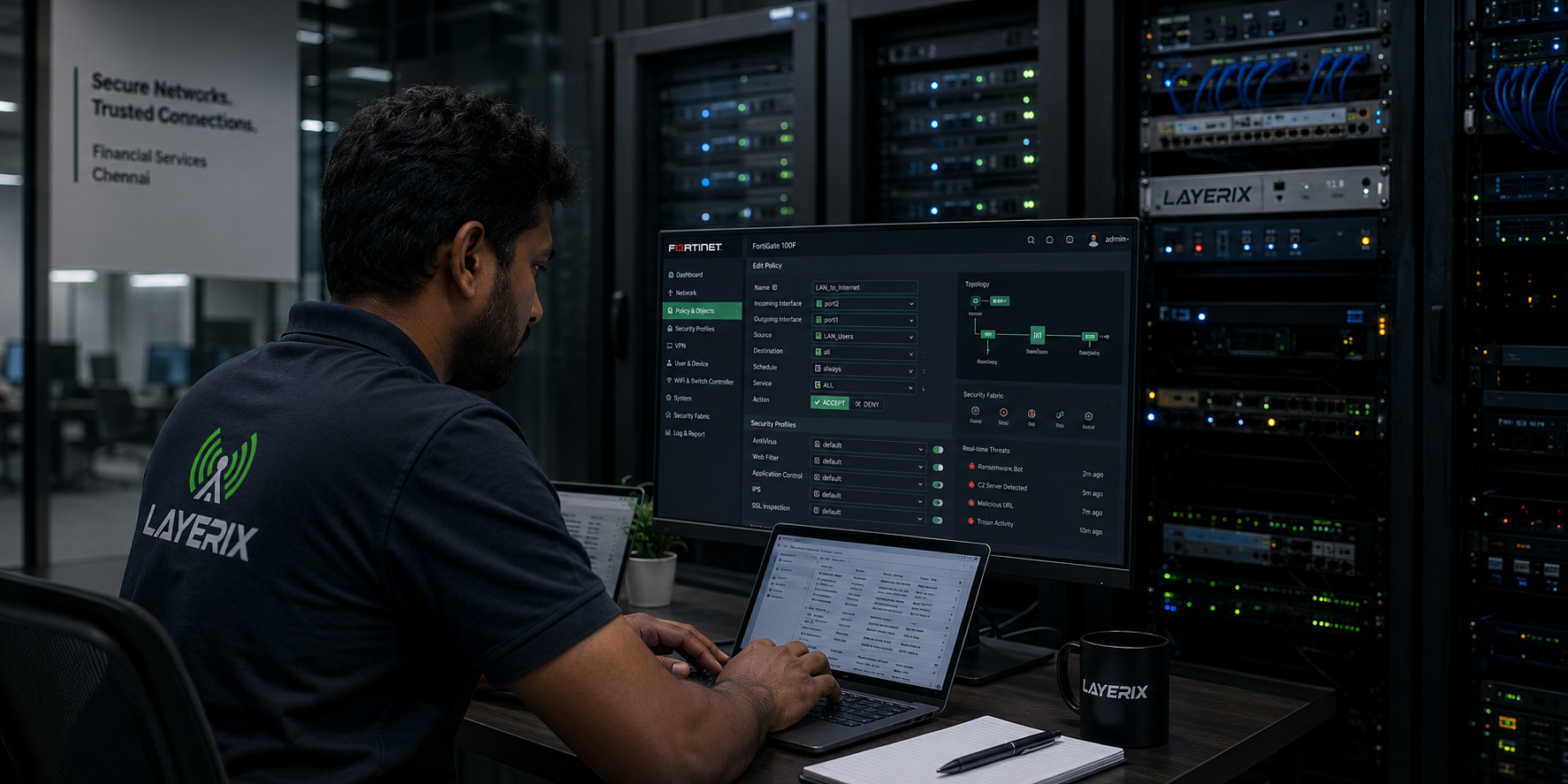
Every photo is from an actual Layerix deployment. No stock imagery. No subcontractors.
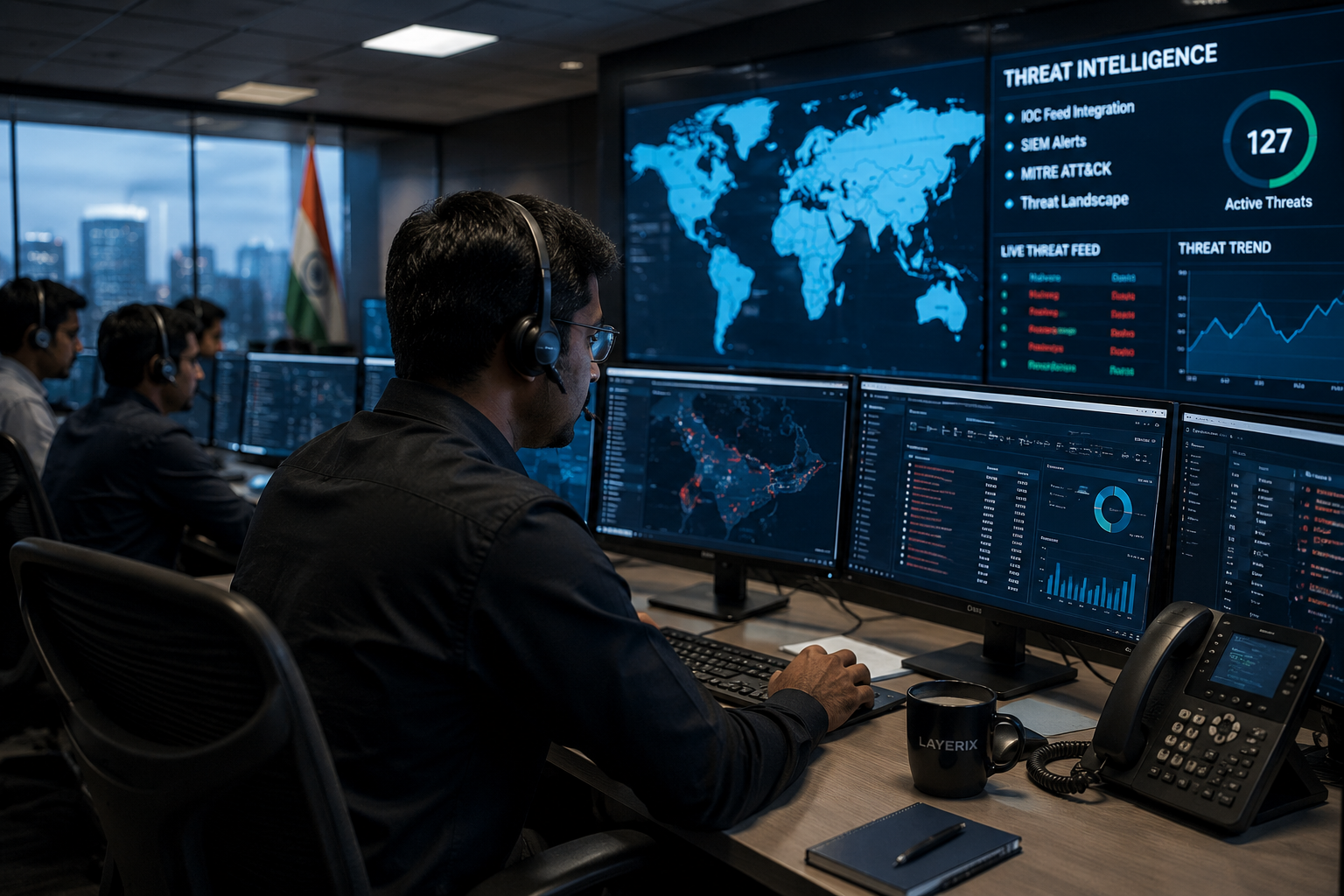
SIEM dashboard review — enterprise NOC, Bengaluru
Threat feed integration — financial services client
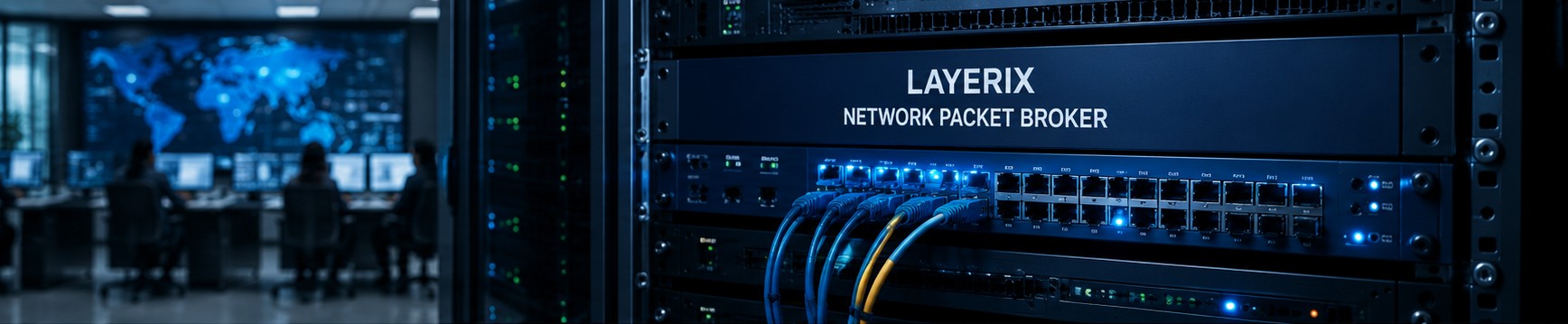
IPS & security appliance rack — data centre, Pune
Threat Intelligence Deployed Across India
IOC feeds, SIEM integration, and dark web monitoring for enterprises in banking, pharma, logistics, and more.
Threat Intelligence for Every Sector
Banking & Finance
Fraud detection, IOC blocking
Healthcare
Patient data threat monitoring
Pharmaceuticals
IP theft & dark web monitoring
Corporate Enterprises
Threat landscape for C‑suite
Manufacturing
OT/IT threat correlation
Technology
Code repository & supply chain threats
Hospitality
POS & guest network threat feeds
Commercial Real Estate
Multi‑tenant SIEM monitoring
Threat Intelligence Questions
Everything about proactive threat detection and IOC integration.
Is threat intelligence only for large enterprises?+
No. SMBs are frequently targeted because attackers know they have weaker defences. Basic threat feed integration into your existing firewall takes less than a day and immediately strengthens your posture.
What is the difference between threat intelligence and antivirus?+
Antivirus reacts to known malware on a device. Threat intelligence proactively blocks malicious infrastructure — IP addresses, domains, and servers used by attackers — before they reach any device on your network.
Do you provide the threat feeds or do we subscribe to them separately?+
Both options are available. For platforms like FortiGate and Check Point, threat feeds are subscription-based through the vendor. For open-source feeds, Layerix integrates them directly. We advise based on your platform and budget.
What is MITRE ATT&CK and should we care?+
MITRE ATT&CK is a globally recognised framework that documents the tactics, techniques, and procedures (TTPs) used by real threat actors. We use it to align your security controls to actual attack patterns — not theoretical ones.
What is an IOC and how does it help us?+
An Indicator of Compromise (IOC) is a specific piece of data — an IP address, domain name, file hash, or URL — associated with a known attacker or malicious campaign. When integrated into your firewall or SIEM, IOCs automatically block or alert on traffic matching those indicators.
How often are threat intelligence reports provided?+
Under a managed engagement, we provide monthly threat landscape summaries and quarterly posture reviews. Critical threat alerts are communicated immediately when actionable for your environment.
What is a SIEM and do we need one?+
A SIEM (Security Information and Event Management) system aggregates log data from across your network — firewalls, servers, endpoints — and correlates it to detect attacks that span multiple systems. For organisations with 50+ users or any compliance requirement, a SIEM is strongly recommended.
Can you integrate threat intelligence into our existing firewall?+
Yes — provided your firewall supports external threat feed integration (most modern NGFWs do). We configure the feed, validate blocking rules, and tune alert thresholds to reduce false positives.
What is the dark web and why are you monitoring it?+
The dark web includes forums and marketplaces where stolen credentials, company data, and attack toolkits are sold and traded. Monitoring for your domain name, IP ranges, or employee credentials on these platforms gives early warning of a breach or targeted attack being planned.
How do I know if we are being actively targeted?+
Without threat intelligence, you often do not know until after a breach. With threat intelligence feeds and SIEM correlation, we can detect reconnaissance activity, credential stuffing attempts, and unusual access patterns that precede an attack — often days or weeks in advance.
Does Layerix manage the threat intelligence programme ongoing or just set it up?+
Both options are available. We can set up feeds and tooling and hand it over to your team with full documentation, or we can manage it ongoing under an AMC or Resident Manager engagement — monitoring alerts, updating feeds, and reporting monthly.
Our Threat Intelligence Success Stories
Real outcomes from enterprises across India















METEC Design and Construction Engineers India Private Limited
India











Ready to See the Threats Before They See You?
Book a threat intelligence assessment. We'll analyse your current visibility and deliver a roadmap to proactive security — no obligation.
Response within 4 business hours · Pan‑India deployments · MITRE ATT&CK aligned