
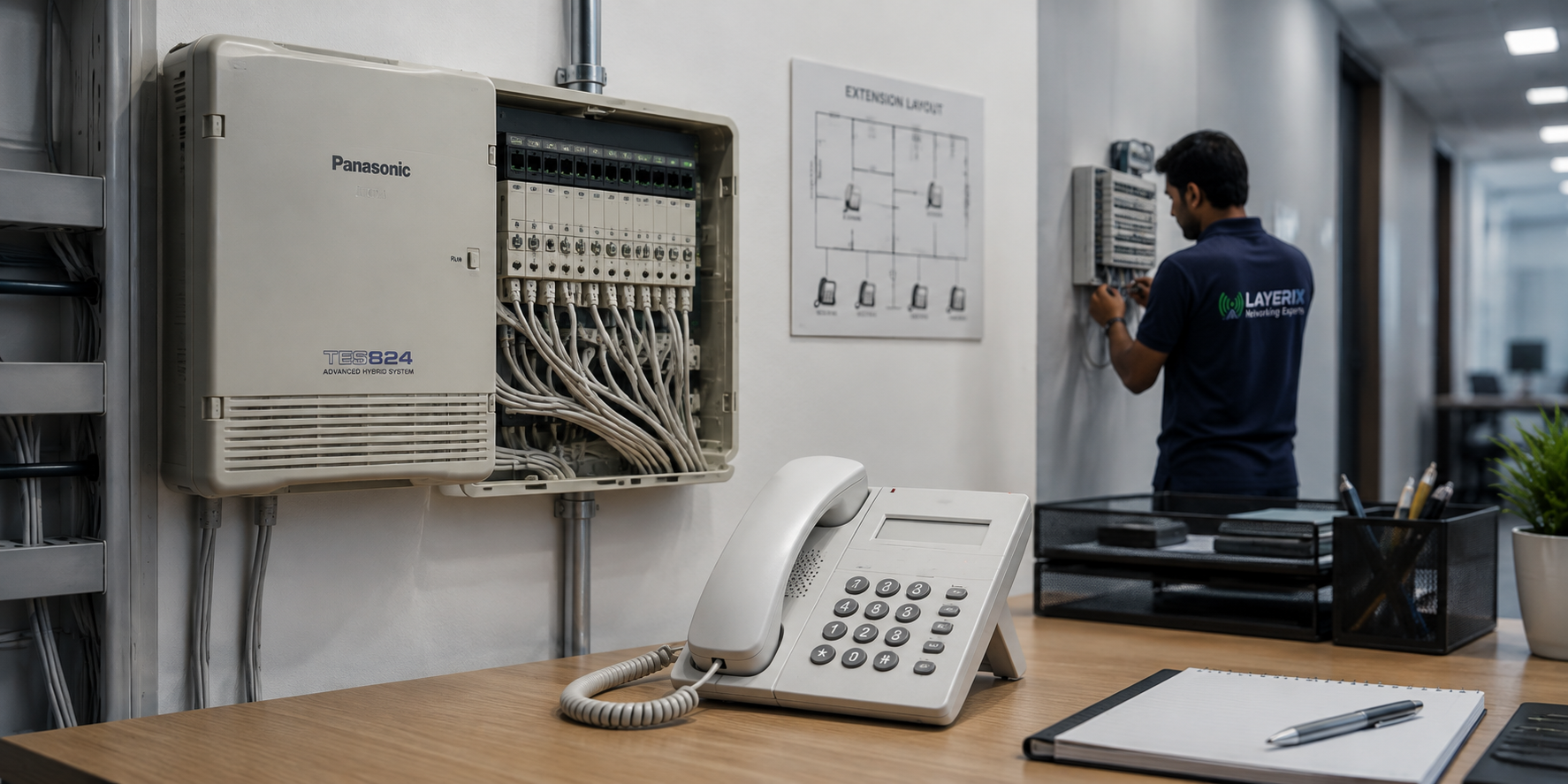
Analog Telephone Systems
Simple. Robust. Always On.
Analog telephone systems and extension wiring for industrial, healthcare, and hybrid environments — deployed and supported entirely by our in‑house engineers.
Trusted by 30+ enterprises across India — connecting critical analog lines






Why Enterprises Trust Layerix for
Analog Telephony
Analog isn't legacy when it's purpose‑built. We design, cable, and install analog telephone systems that work exactly where IP phones fail — with zero subcontracting.

POTS & Hybrid Expertise
We design, cable, and integrate analog systems alongside IP PBX — no other vendor needed.
Power‑Independent Design
Analog phones on POTS lines work through power outages — critical for emergency and safety lines.
Industrial‑Grade Installations
Rugged wall‑mount phones, weatherproof enclosures, and cabling that survives factory floors.
Full Documentation
Every extension mapped, every pair tested — you receive complete as‑built documentation at handover.
100% In‑House Team
The same engineer who surveys the site installs and tests the cabling. No subcontractors.
AMC & Break‑Fix Support
Ongoing support through annual maintenance contracts or on‑demand break‑fix response.
Analog Telephone Deployment in 6 Steps
Site Audit
Map existing lines, extensions, and PBX capacity. Identify where analog is the right choice.
Design & BOQ
Extension plan, cabling design, POTS/SIP integration — documented before any hardware is ordered.
Cabling & Termination
Run twisted‑pair cabling, terminate on punch‑down blocks or patch panels, and label everything.
Phone Installation
Mount wall or desk phones, configure analog‑to‑IP bridges (ATAs) where needed.
Line Testing & Certification
Test every pair for continuity, noise, and dial‑tone — verify with the PBX and external lines.
Handover & Training
Full documentation, extension directory, admin training, and ongoing support options.
Scope of Work
Where Analog Is the Correct Choice
Manufacturing & Warehouses
Rugged analog phones withstand dust, moisture, and vibration — ideal for factory floors where IP phones are impractical.
Power-Independent Locations
Analog phones on POTS lines draw power from the telephone line itself — no power outlet, no PoE switch required.
Construction & Temporary Sites
Simple, cable-based systems that work without network infrastructure — deployed fast and removed just as easily.
Legacy System Extensions
Adding extensions to an existing analog PBX without replacing the entire system — cost-effective and non-disruptive.
Emergency & Safety Lines
Analog emergency phones in lifts, stairwells, and fire panels — always available, independent of data network.
Healthcare Auxiliary Lines
Nurse call ancillaries, bedside phones, and utility room lines that complement the main IP telephony system.
Real Analog Telephone Deployments
Every photo is from an actual Layerix deployment. No stock imagery. No subcontractors.
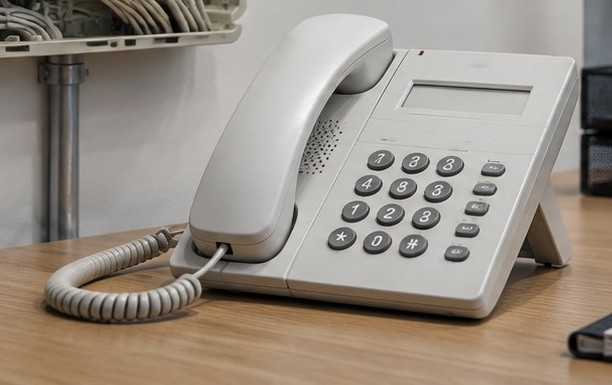
Analog extension wiring — industrial facility, Pune
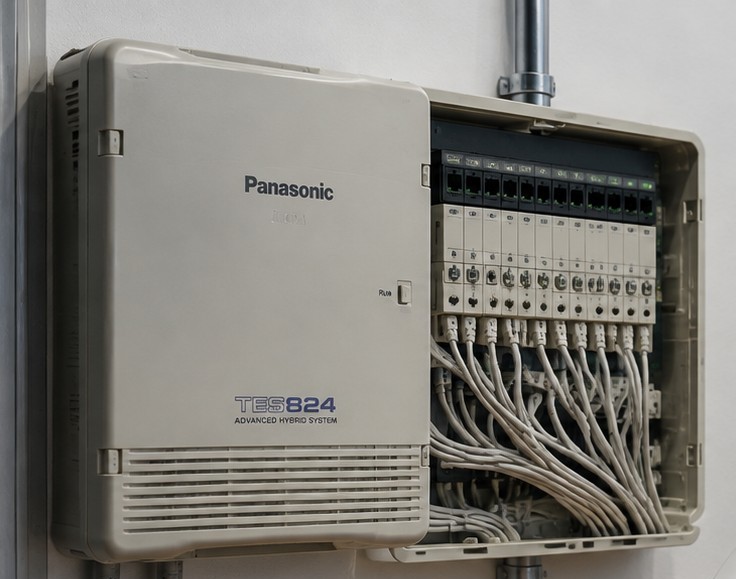
Punch-down block termination — manufacturing plant, Bengaluru
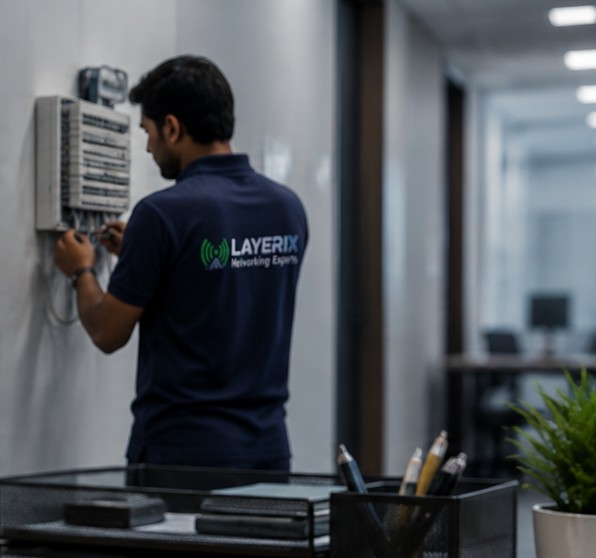
Wall phone installation — warehouse, Gujarat
50+ Analog Deployments Across India
Industrial facilities, warehouses, hospitals, and emergency lines — all installed by our own team.
Analog Telephony for Every Sector
Manufacturing
Factory floor phones, rugged wiring
Healthcare
Nurse stations, emergency lines
Construction
Temporary site telephony
Emergency & Safety
Lift phones, fire panels
Corporate (Hybrid)
Analog extensions on IP PBX
Hospitality
Back‑office analog lines
Pharmaceuticals
Cleanroom & lab extensions
Banking & Finance
Compliant call recording adjuncts
Analog Telephone Questions
Everything you need to know about analog telephony.
What is an analog telephone system?+
An analog telephone system uses traditional electrical signals over copper wire to carry voice. Phones connect directly to the PBX or to a POTS (Plain Old Telephone Service) line via simple two-wire connections. Unlike IP phones, analog phones do not require a network switch, PoE, or IP address — they simply need a pair of copper conductors.
Are analog phone systems still relevant in 2024?+
Yes — for specific use cases. Analog phones excel where network infrastructure does not exist, where power reliability is uncertain, or where the physical environment is too harsh for IP equipment. Factory floors, lift shafts, emergency lines, and remote outbuildings are all environments where analog telephony remains the correct choice.
Can analog phones work alongside an IP PBX?+
Yes. Most IP PBX systems support analog extensions through FXS (Foreign Exchange Station) ports or via an analog telephone adapter (ATA). We configure the bridge between your IP PBX and analog extensions so they dial and receive calls the same way as IP extensions.
What is a POTS line?+
POTS stands for Plain Old Telephone Service — the traditional copper telephone line provided by a telecommunications carrier. POTS lines are increasingly being replaced by SIP trunks, but remain available in most urban and semi-urban areas. We integrate POTS lines into your PBX configuration where required.
Do analog phones work during a power outage?+
POTS-connected analog phones draw their operating power from the telephone line itself — supplied by the telephone exchange. During a power outage, they continue to operate normally without any battery backup or UPS. This makes them the right choice for emergency lines and locations without reliable power.
Can you extend analog wiring across a large facility?+
Yes. Analog voice signals can travel up to approximately 5km over standard twisted-pair copper before requiring a repeater. For large factory sites or multi-building campuses, we design the extension wiring with appropriate cable grades and termination equipment to cover the full footprint.
What types of analog phones do you supply and install?+
We supply and install standard desk phones, wall-mounted phones (suitable for factory and warehouse environments), weatherproof outdoor analog phones, and emergency or lift phones with simple one-button operation. We select the phone model based on the environmental requirements of each location.
Can analog extensions dial through the main PBX to external numbers?+
Yes — when connected to an IP PBX via FXS ports or an ATA, analog extensions can dial internal and external numbers through the same PBX dial plan as IP extensions. They appear as normal extensions in the directory.
How does Layerix handle the cabling for analog extensions?+
We run dedicated two-wire twisted pair from each analog phone location to the PBX room or distribution frame, terminate on punch-down blocks or patch panels, test each pair for continuity and noise, and document every run. The same in-house team that designs the system installs the cabling.
Is it worth upgrading from analog to IP, or should we keep analog?+
It depends on the environment and the number of extensions. For office environments, IP telephony is almost always better — more features, simpler cabling, softphone support. For factory floors, emergency lines, and remote locations, analog remains the right choice. We assess your facility and recommend a hybrid approach where appropriate — IP where it works best, analog where it is correct.
Can you add analog extensions to a facility without replacing the existing PBX?+
Yes. If your existing PBX has available analog ports, we can add extensions without any system replacement. If the PBX is at capacity, we add an FXS expansion module or a separate ATA. We assess your current system capacity before recommending a solution.
Our Analog Telephony Success Stories
Real outcomes from enterprises across India
























METEC Design and Construction Engineers India Private Limited
India




















Need a Reliable Analog Telephone System That Just Works?
Book a site assessment. Our engineer will map your existing lines, recommend the right analog setup, and deliver a fixed‑price quote — no obligation.
Response within 4 business hours · Pan‑India deployments · POTS & hybrid specialists