

Containerisation
Docker · Kubernetes · MLOps Ready
On‑premise Docker and Kubernetes – private registry, CI/CD integration, persistent storage, and monitoring. Built for microservices and AI/ML workloads with data sovereignty.
K3s · Rancher · OpenShift
GitLab CI · Jenkins · ArgoCD
CSI drivers · StatefulSets
GPU scheduling · LLM serving
Trusted by 30+ enterprises across India






Complete Container Infrastructure
From Docker and Kubernetes to private registry and CI/CD – all delivered in‑house, pan‑India, on your hardware.

Docker & Container Runtime
Docker deployment on‑premise – containerised applications, image building, and multi‑stage builds. Best practices for security and image size optimisation.

Kubernetes Cluster Deployment
On‑premise Kubernetes – control plane and worker nodes, CNI networking, Ingress controllers, and RBAC security. HA control plane for production.

Private Container Registry (Harbor)
Harbor private registry with vulnerability scanning, image signing, and role‑based access. Integrates with CI/CD for secure image promotion.

CI/CD Pipeline Integration
GitLab CI, Jenkins, or ArgoCD deployment pipelines – automated builds, testing, and rolling deployments to Kubernetes.

Persistent Storage for Stateful Apps
Kubernetes Persistent Volume Claims (PVC) with CSI drivers. Integration with NAS/SAN for stateful applications – databases, message queues, and AI datasets.

Monitoring & Observability
Prometheus, Grafana, and ELK stack for monitoring, alerting, and log aggregation. Custom dashboards and alert rules for production clusters.
Why Enterprises Choose Our
Container Engineers
Containerisation is not just about running Docker – it's about orchestration, security, persistent storage, and CI/CD integration. We design systems that enable modern application delivery with speed and reliability.

Design‑Before‑Deploy
Cluster architecture, networking, storage, and security are designed on paper before a single container runs.
Platform‑Neutral
We deploy vanilla Kubernetes, Rancher, K3s, or OpenShift – we recommend the right platform, not a forced vendor.
Security by Default
RBAC, network policies, pod security policies, and vulnerability scanning are configured from day one.
Full Documentation & Runbooks
Cluster architecture, deployment workflows, and operational runbooks – all delivered at handover.
AMC with Cluster Health Monitoring
Proactive health checks, node monitoring, certificate renewal, and 12×6 break‑fix support.
MLOps & AI Ready
GPU scheduling, model serving (KServe/Seldon), and integration with vector databases for RAG pipelines.
From Assessment to Production in 6 Steps
Assessment & Planning
Evaluate application architecture, containerisation readiness, and target environments.
Cluster Architecture Design
Design Kubernetes cluster (control plane, workers, storage, networking, ingress).
Platform & Tooling Selection
Select Kubernetes distribution, CI/CD tools, registry, and monitoring stack.
Installation & Configuration
Deploy cluster, configure networking, storage, RBAC, and integrate with registry.
CI/CD & Deployment Pipeline
Set up GitLab CI/Jenkins/ArgoCD pipelines for automated builds and deployments.
Testing, Migration & Handover
Validate deployments, performance test, migrate workloads, and deliver documentation.
Container vs VM vs Bare Metal – Which One Do You Need?
| Feature | Containers | Virtual Machines | Bare Metal |
|---|---|---|---|
| Startup Time | Milliseconds | Minutes | Hours |
| Overhead | Minimal (shared kernel) | Moderate (full OS) | None |
| Isolation | Light (namespace isolation) | Strong (full hardware isolation) | Strong (dedicated hardware) |
| Best For | Microservices, CI/CD, modern apps, AI/ML | Legacy apps, full OS isolation | High‑performance, single‑tenant workloads |
| AI/ML Readiness | Excellent (K8s + GPU operators) | Good (vGPU, passthrough) | Best (full GPU access) |
*Layerix recommends the right architecture based on your workloads, team skills, and roadmap.
Real Container Deployments
Live containerisation deployments across Karnataka and Tamil Nadu – SaaS platforms, DevOps teams, and AI/ML workloads.
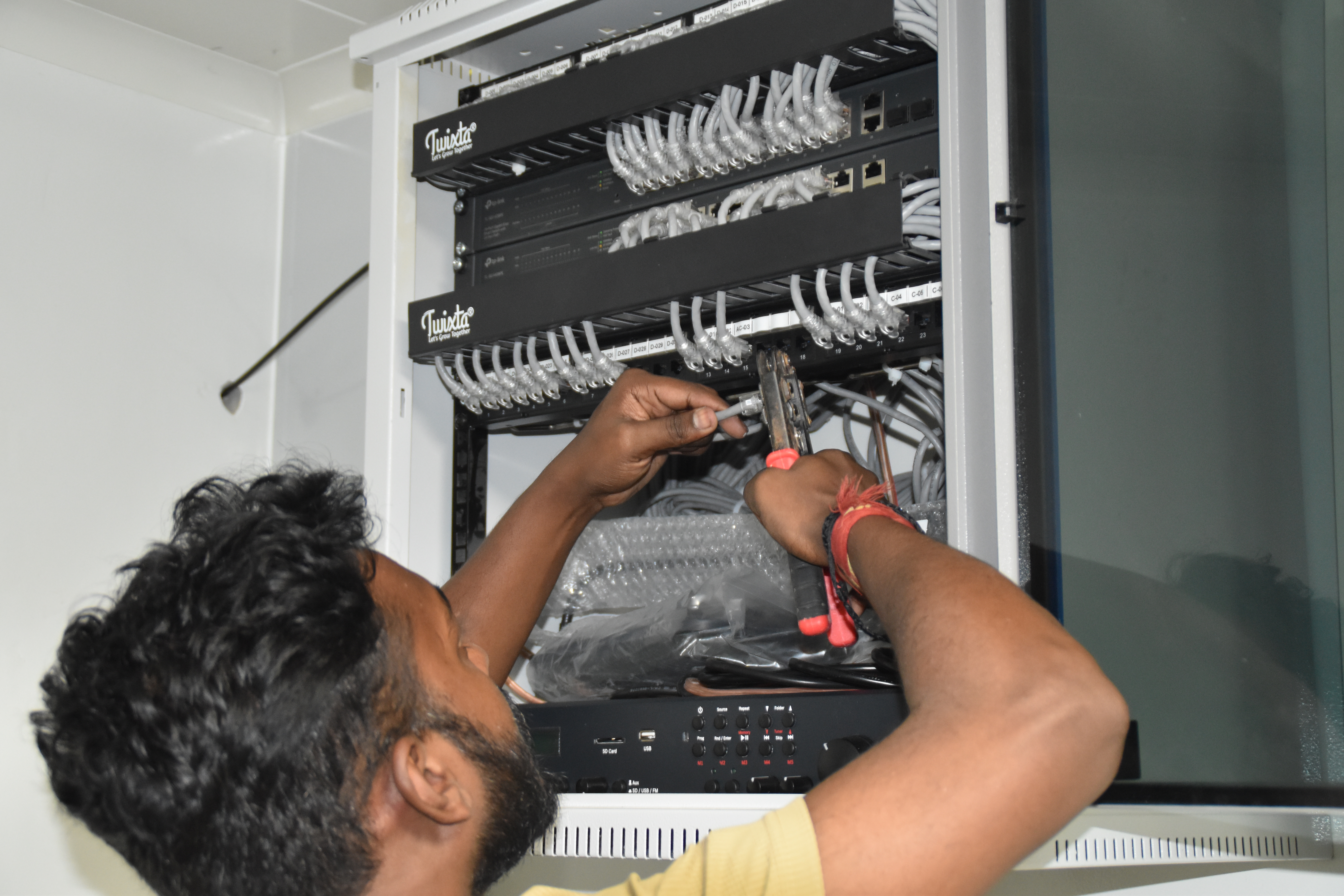
Resident IT engineer support — Yaas Technology Solutions, Karnataka

Enterprise WiFi deployment — Somerset Therapeutics, Karnataka

Structured cabling & CCTV infrastructure — Eriez, Tamil Nadu
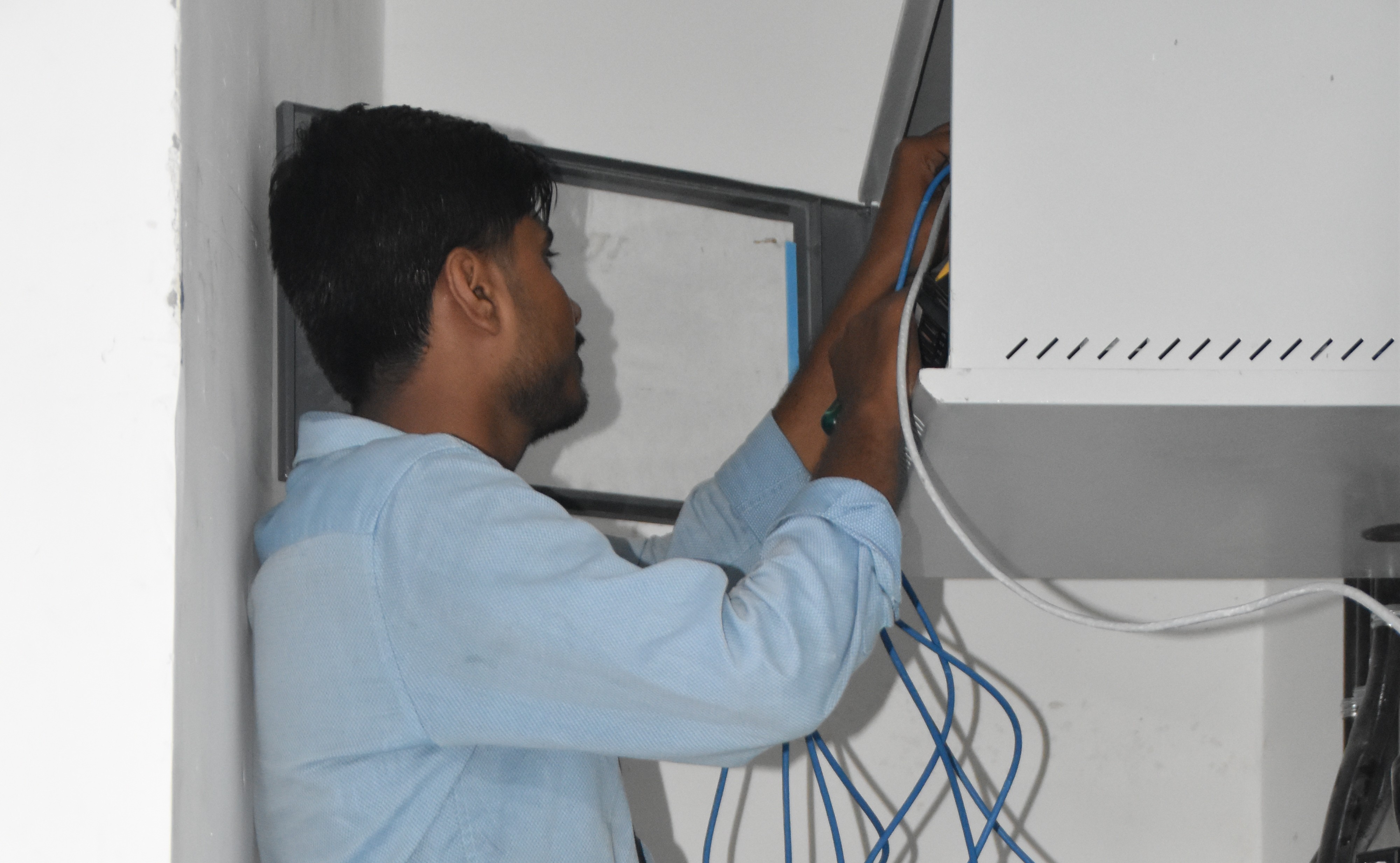
Break‑fix troubleshooting & stabilization — AEOS Labs, Karnataka

Healthcare network deployment — HCG Cancer Hospital Tower 6, Karnataka
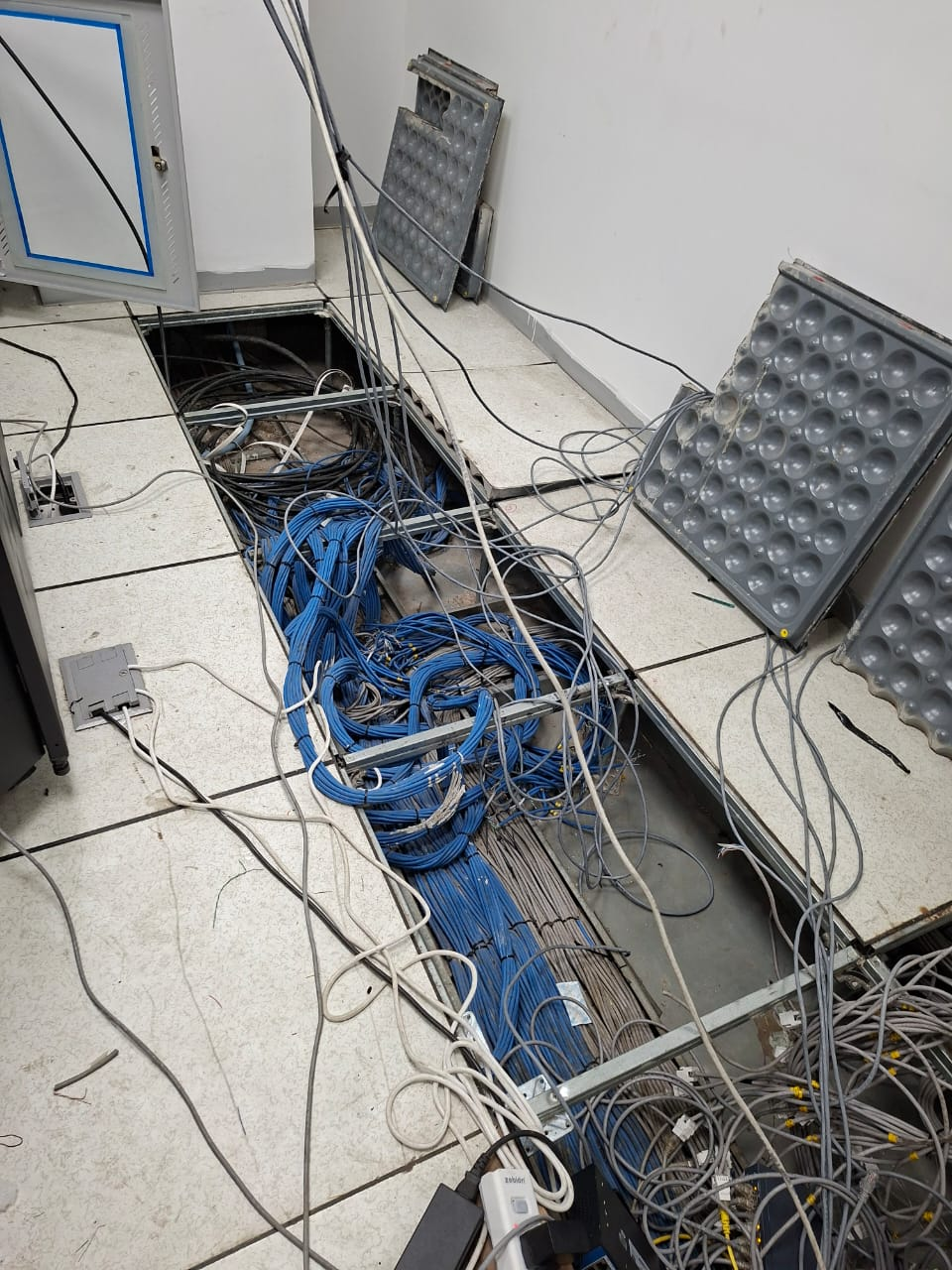
Enterprise infrastructure rollout — KRR Engineering Solutions, Tamil Nadu
25+ Enterprise Deployments Across South India
Docker, Kubernetes, CI/CD, MLOps – all delivered 100% in‑house.
Trusted Across Industries in India
Technology Companies
Corporate Offices
Hospitals & Healthcare
Pharmaceuticals
Manufacturing
Banking & Finance
Education
Hotels & Hospitality
“Layerix deployed a 5‑node Kubernetes cluster with Harbor registry and GitLab CI for our SaaS platform. Zero‑downtime rolling deployments and full observability. MLOps ready with GPU nodes.”
CTO
SaaS Company, Bengaluru
“We containerised our legacy monolith into microservices with Layerix's help. Docker and Kubernetes on‑premise, with persistent storage for PostgreSQL. Deployment time went from 2 hours to 5 minutes.”
Infrastructure Lead
Fintech Company, Mumbai
Frequently Asked Questions
Everything you need to know about containerisation.
What is the difference between Docker and Kubernetes?+
Docker is a container runtime that builds and runs individual containers. Kubernetes is a container orchestration platform that manages clusters of containers – handling scheduling, scaling, self‑healing, and service discovery. You can use Docker without Kubernetes, but Kubernetes typically uses Docker (or other runtimes) as the underlying container engine. For production deployments, Kubernetes is the standard orchestrator.
What is the difference between containers and virtual machines?+
Containers share the host OS kernel – they are lightweight, start in milliseconds, and have minimal overhead. VMs have their own full OS – they are heavier, start in minutes, and provide stronger isolation. Use containers for microservices and modern apps; use VMs for legacy workloads that need full OS isolation.
Do we need Kubernetes or is Docker sufficient?+
Docker alone is sufficient for development and small deployments. For production at scale, Kubernetes is recommended – it handles failover, scaling, rolling updates, and service discovery automatically. Layerix recommends Kubernetes for any production container deployment with more than a few containers.
How do you handle persistent storage for containers?+
We integrate Kubernetes with NAS/SAN storage via Persistent Volume Claims (PVCs). We use CSI drivers to provision storage dynamically – including support for NFS, iSCSI, and Ceph. This ensures stateful applications (databases, message queues) retain data across container restarts.
What is a private container registry and why do I need one?+
A private registry stores your container images securely within your network – ensuring image integrity, faster pulls, and compliance with security policies. We deploy Harbor or GitLab Container Registry on‑premise, with vulnerability scanning and RBAC built in.
Can Kubernetes be used for AI/ML model serving?+
Yes. Kubernetes is the standard platform for MLOps and model serving – supporting GPU scheduling, auto‑scaling, rolling updates, and canary deployments. We deploy KServe, Seldon, or Ray on Kubernetes for serving LLMs and other AI models on‑premise with data sovereignty.
Our Success Stories
Real container deployments across India




Ready to Modernise with Containers?
Book a container assessment. Our engineers analyse your application architecture, design the right cluster, and give you a fixed‑price proposal.
Response within 2 business hours · Pan‑India deployments · 100% in‑house team